Looking at these figures, it is clear that the NMF decomposition produces more confident results for the morning and night clusters, while the probabilities produced for the people in the rest of the clusters are less confident. This is also evident by the heatmaps produced in Fig1(a), as there are a lot of overlaps for the rest of the clusters, while the morning and night clusters are more separated. We theorize that people that work out in the morning and at night have more fixed schedules, preventing them from visiting at different hours. Surrounding yourself with other active people builds a sense of relatedness and accountability.
Build your body. Build your mind. Build your life.
- In our model, we first identified the treatment and control groups for each intervention.
- While this might help temporarily, drug and alcohol addictions require more serious medical intervention and time.
- However, despite the significant association between intention and PA, a considerable discrepancy known as the “intention-behavior gap” exists between them, suggesting other significant factors may influence health behavior [7,8,9].
- Neuroscience has asked how conscious and goal-directed actions are converted into a habit (Yin & Knowlton, 2006).
- It can be especially hard to get back to it if we break a streak of consistent exercise.
- With a regular schedule of moderate-intensity physical activity, people start to benefit from even less than 150 minutes a week of moderate-intensity physical activity.
That’s what psychologists Daniel Kahneman and Amos Tversky found with their Nobel Prize winning research. “If we can motivate people with sticks rather than carrots it can actually be more effective,” Milkman says. Set up a commitment device, a sort of contract with your future self to follow through on your goals.
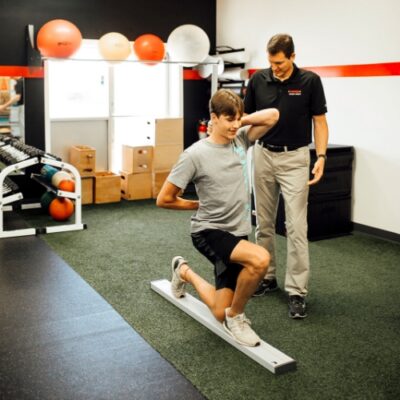
Find ways to lower your stress level.
Habit theory-based behaviour change intervention studies found that implementing intention in a particular cue context increases habit strength and behavioural frequency (Beeken et al. 2017; Kaushal and Rhodes 2015). A narrative review of 15 intervention studies found cue-context repetition and action planning to encourage engagement in health-promoting behaviours as vital components of habit theory (Gardner and Rebar 2019). Moreover, a study conducted on a group of self-defined social drinkers measuring self-reported drinking habits showed that drinking behaviour was positively enacted as a rising drinking habit strength (Albery and Spada 2021). The third hypothesis stated that positive affect may moderate the relationship between behavior frequency and automaticity. No significant moderation effects could be found, neither on the between-level nor on the within-level, and neither for affective valence at the end of the class nor for the increase of affective valence during class.
A key health habit: 10,000 Steps per day
Over time, your brain starts linking “end of the workday” with the expectation of that feel-good post-run high. Establishing a regular exercise routine delivers far more than a sculpted body. When exercise becomes a habit, you’re not madmuscles legit just investing in your present—you’re setting yourself up for decades of better health, resilience against life’s stressors, and the confidence that comes from thriving in your own skin. Whatever your exercise goal may be, the question of what makes someone stick to a behavior has stumped researchers and practitioners alike for decades. But when life derails your workout routine or your motivation plummets, research shows that relying on habits you’ve developed over time can help you go on autopilot—getting the work done without too much brainpower.
It’s Time to Stand Up for Science
This approach allowed us to identify the number of visits that best demonstrated sustained engagement and habit formation during the critical early weeks of membership. Critical visit counts for each week, weeks 6 through 52, are included in Figure 4(d). Given the exceptional circumstances surrounding the data, we restricted our analysis to data from 2022 through the end of 2023. Following the insights of project partners at MAC, we concluded that it would be better if we considered only the first paid contract for all customers. Additionally, we agreed to limit the contract type to annual, instead of having different contract types such as 6-month or monthly contracts.
Exercise habit formation in new gym members: a longitudinal study
Figure 1(e) presents the cluster transition matrix for the important weeks of 6 and 17. On both axes, we have the 5 clusters, and the annotations represent some percent of the population. Additionally, most of the transitions are from clusters with closer times, which is to be expected. We classified and named these behavioral groups according to the hours that they most visited. The density of the visits presented in the heatmap to reflect the most preferred times for each cluster.

Set Realistic Goals
Modern cognitive-behavioral therapy (CBT) builds on this integration of cognition and behavior, offering structured strategies for identifying and changing thought and behavior patterns that keep unhelpful habits in place. Clues to the mystery of habit formation can be found in an ancient area of the brain called the basal ganglia (Yin & Knowlton, 2006). Active habits are those we develop by repeated intention and effort, crystalizing as skills we perform with little or no thought.
Editor & Reviewers
For instance, the book also set three weeks as the time needed for people to get used to a new house or change their mind about their beliefs. Though all the included intervention studies adopted a habit formation approach, there still had a considerable heterogeneity, with an I2 value of 64%. This variation in results could potentially be attributed to disparities in intervention delivery methods, the BCTs employed, the duration of the intervention and follow-up periods, and the characteristics of the study population. This indicates that, habit formation intervention is still at its developing phase and do not have relatively well-acknowledged intervention guidelines or standers [39]. To calculate the overall impact of the habit formation intervention on PA habit strength, we utilized Cohen’s d to standardize and align the SRHI and SRBAI scales.
And so, if we miss out on one workout or eat a bit more than usual during the holidays or do anything else that ‘violates’ the terms we set out to build our new habits, we tend to feel overly disappointed. Most of us have heard the statement that it takes 21 days to form a new habit. While there is more to it than that (more on that below), the key here is getting over that initial hump of starting out. Luckily, I have decades of experience due to the fact that my exercise routine is consistent and it’s been a part of my life for an incredibly long time. But explaining what steps I’ve taken to get to this point has always been tricky.
Gardner and Lally (2013) found that prior action was a stronger predictor of habit strength among participants who were of the self-determined motivational regulation type and showed autonomous motivation such as intrinsic interest. In line with our hypothesis on the moderation effect, they speculate that the enjoyment of intrinsically motivated PA may reinforce the past behavior-habit strength relationship. Personalizing exercise programs is also a crucial factor in encouraging long-term physical activity. Studies have shown that personalized training sessions with certified personal trainers help maintain exercise behavior and motivation, particularly in groups such as female college students [20]. Furthermore, supervised, periodic exercise programs, which are often customized to the individual’s fitness level and goals, have been shown to lead to greater improvements in physical fitness and adherence compared to self-directed training [21].
The art of forming habits: applying habit theory in changing physical activity behaviour
This research has highlighted crucial brain pathways involved in forming habits. Maybe you commit to three 20-minute workouts weekly, with a stretch goal of five workouts per week. Building a long-term habit should be about feeling good and building on positive momentum, not being hard on yourself. To determine that a two-week absence is the threshold for breaking the survival streak, we analyzed all intermediate periods between consecutive gym attendance periods, as shown in Figure C1. The Figure displays the cumulative distribution of each intermediate gap between streaks, with 50% of all intermediate gaps being one week long.
3 Cluster-level Deviations for Demographic Groups
Routines do not require conscious effort or thought.7,13 Although there are multiple strategies to form a routine, an important one is to help patients develop a structure to their day such that fewer decisions need to be made. When presented with a choice, individuals typically pick the option that is the easiest, quickest, and most enjoyable.19 Unfortunately, these choices often counter most health recommendations. The success of meal replacements as a weight loss aid exemplifies how reducing the number of decisions an individual makes can lead to improved health.20,21 Another approach is to train patients to plan out decisions prior to being faced with the decision. When helping a patient plan how to fit health recommendations into their day, it is important for health care providers and patients to be realistic.